Hello
About me.
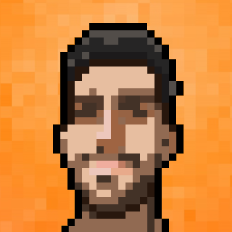
I'm Miguel Vila, a computer engineer from Estarreja. I write code, build hardware and usually have a few other things on the go.
I grew up in Estarreja, Portugal, and it's still the place I call home. I like being able to open the door and see woodland and dirt tracks, knowing that town is half an hour's walk away and I can go fishing whenever I feel like it. It's a small place where people know each other, and much of my life still revolves around the people and activities here.
Taking things apart
As a child, I took apart remote-controlled cars, old computers and pretty much anything I could get my hands on. During the summer holidays when I was ten, I decided to do the same to my mother's computer, the only one we had at home, while she was at work. After dismantling and cleaning the whole thing, I had to work out how to put it back together without being able to look up a YouTube tutorial: the only computer I could use was now in pieces, and I'd never done this before. I was connecting the last front-panel wire as she was parking the car.
Around that time, I was starting to find reasons to build things too. I love birds, pretty much anything with a beak and feathers, so when my grandfather accidentally left their enclosure open and my favourite dove escaped, I was devastated. She eventually came back, but I didn't want to go through that again. At about eleven, I fitted a battery-powered buzzer that would sound for as long as the door was open.
My grandfather had a lot to do with my interest in electrical work, and I also wanted to become an electrician. Electronics was a difficult hobby for a child with no money, though: components were expensive, and ordering them online wasn't straightforward. I ended up spending more time programming, where I could experiment and write my own programs even if my computer was a potato.
Hardware, software and a soldering iron
I went on to study Computer and Informatics Engineering at the University of Aveiro, finishing my bachelor's in 2024. I'm still there, now doing a master's in Computer and Telematics Engineering, and I still enjoy bringing code and electronics together. Spending an afternoon soldering and finally getting everything to work is one of my favourite parts of it.
Of the projects I've built at university, the weather station and the AES IoT gateway are among my favourites because they let me work on both the hardware and the software, as did the Aditus access system. Sometimes wanting to try something gives me more work than the project actually needs: in an unpublished experiment with one of the weather-station sensors, I used an ATtiny to communicate with the ESP32 over I²C, even though the ESP32 had plenty of spare pins. I wanted to build my own I²C peripheral and find out how it was done.
When one of those experiments doesn't work, I separate the problems and deal with them one at a time until I find the fault. There are still plenty of things I want to explore, especially analogue electronics, Audio over IP and reverse engineering embedded devices.
Aveiro, research and Linux
While I was still doing my bachelor's, I started working at Instituto de Telecomunicações in 2023 through an undergraduate research grant. My work there continued until 2026, taking me from exploring IPFS in 5G scenarios for edge computing to the Aveiro Tech City Living Lab (ATCLL), where I developed a platform for viewing data from the city's LiDAR, radar and cameras in real time. I later extended it to look back through historical data, including average speeds along road sections, congestion and parking statistics. Along the way there was plenty of code to write, documentation to read and decisions to document.
Outside the research work, I spent a lot of time involved with Linux. I started with Ubuntu and never really wanted to go back to Windows, partly because I like GNOME's design and partly because of how much I can automate from the command line. With Linux servers in my homelab too, it makes sense to get to know that environment well. One of the things I value most about open source is being able to read someone else's code, work out how they approached a problem and learn from it.
At university, that interest also gave me a way to meet people through GLUA, the University of Aveiro's Linux group, where I was a coordinator. I ran introductory Linux workshops, wrote installation and troubleshooting guides, and made a script to install Quartus Prime Lite on Ubuntu and Fedora. GLUA is a big part of why I'm so fond of the university, along with the professors and security staff I got to know and the department itself, which I've become rather attached to.
Away from the desk
Back in Estarreja, a lot of that social side of my life happens around the folk group where I play accordion and the carnival group where I help with whatever needs doing, from mechanical work to costumes. I also make liqueurs and take on quite a few odd jobs: repairing computers, doing electrical installations, hiring out and setting up sound for corporate events, working behind a bar or even building OSB walls. Friends and colleagues often come to me when they need an idea for solving something.
Running has been part of my life since I was little, although it's taken a back seat over the last few years. I still enjoy getting out for a walk, and a good weekend has room for dinner with friends, a rehearsal with the folk group or time with my girlfriend. I'm a sociable person and need to feel comfortable with the people around me, which is something I look for in a team at work too: a welcoming place where I can ask questions freely, because I'll probably have quite a few.
Say hello
If you'd like to talk about a project, a role or something you're building, email me.